Phase 1 — Discovery
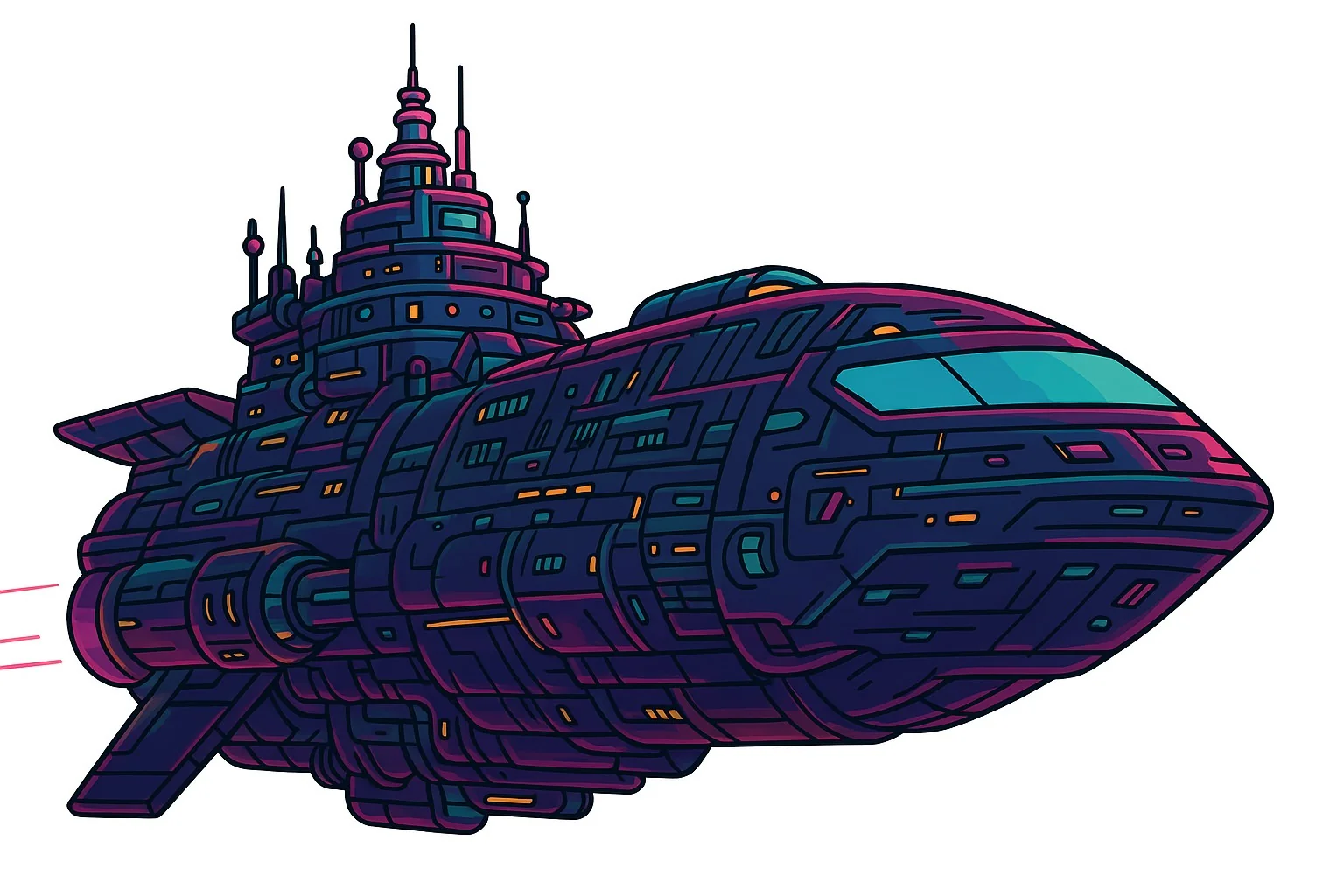
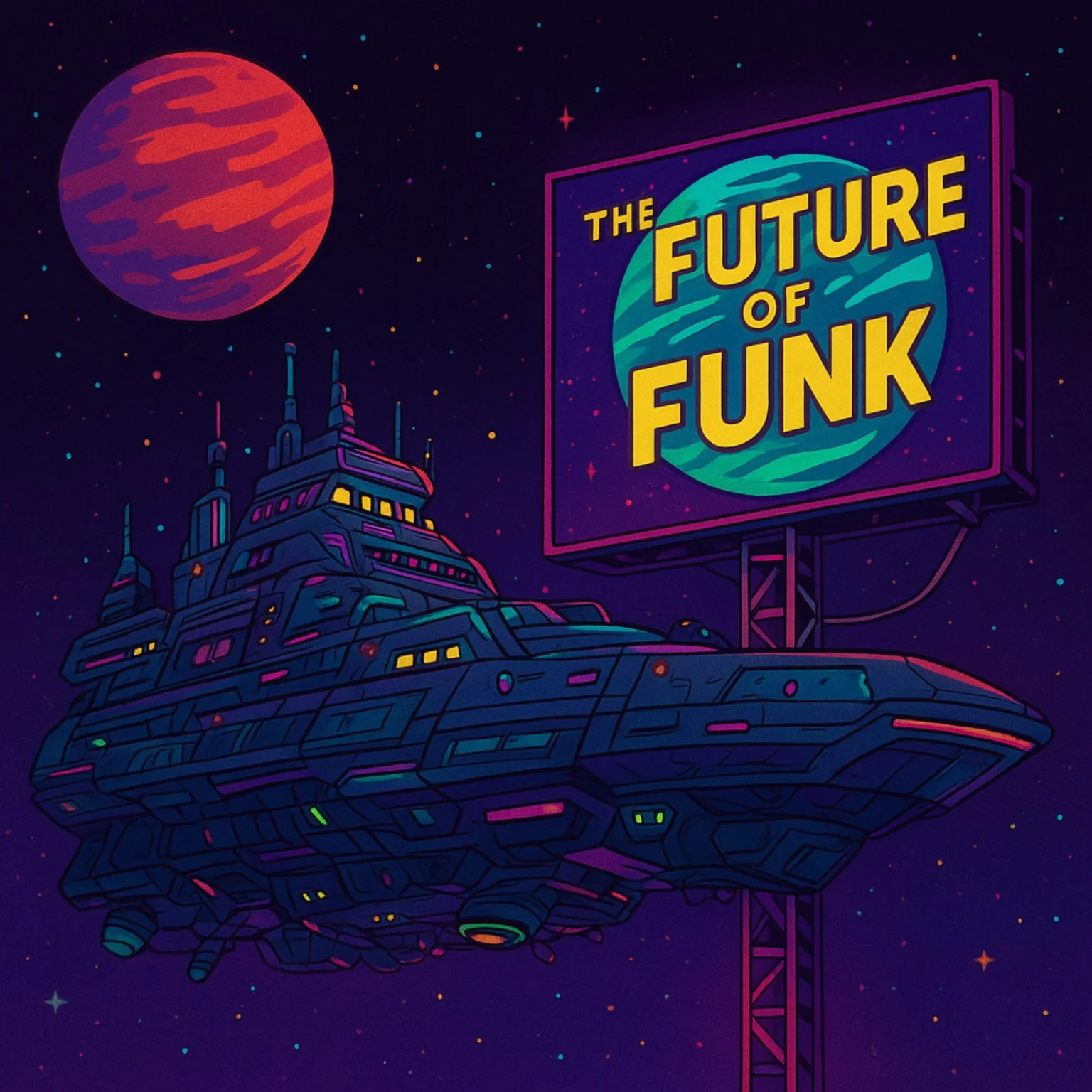
The first cruiser established the silhouette: long nose, layered superstructure, neon accents, and a floating-city profile.
This chapter explains how the Future of Funk ship became the central visual object of the campaign: a spacecraft, archive symbol, video asset, and worldbuilding vehicle for the Chicago Jaxxx transmission.
This chapter explains how the Future of Funk ship became the central visual object of the campaign: a spacecraft, archive symbol, video asset, and worldbuilding vehicle for the Chicago Jaxxx transmission.
Brad Lee — Creator, producer, and driving force behind The Future of Funk project. Co-assembled the roster, developed the musical direction, and helped bring the compilation to life.
Ronnie Vineyard — Co-assembled a major part of the roster alongside Brad Lee, while leading visual development, worldbuilding, campaign design, story bible creation, archive documentation, and creative direction for the Future of Funk universe.
The Combined — Collaborative creative partnership between Brad Lee and Ronnie Vineyard responsible for developing concepts, visual campaigns, and promotional initiatives connected to The Future of Funk.
Cristian Varela — Internationally recognized DJ, producer, and featured contributor whose involvement helped connect the project to a broader global audience.
Wyndell Long — Early contributor whose completed remix helped establish the foundation of The Future of Funk during the project's formative stages.
Angel Alanis — Chicago techno pioneer, featured contributor, and longtime influential figure within the underground electronic music community.
Maria Goetz — Featured contributor and collaborator whose participation further expanded the project's international roster.
Josh Moseley — Owner of Chicago Jaxxx and release partner whose platform helped bring The Future of Funk into official release circulation and supported the project's development.
Frankie Vega — Chicago Jaxxx A&R, artist, and project contributor involved in release coordination, campaign feedback, and artist-side development throughout the project.
Chapter 4 // Fleet Command
While the Story Bible established the mythology of The Future of Funk, the project still lacked a visual centerpiece. Early concepts explored futuristic cities, neon worlds, and retro science-fiction aesthetics, but none provided a unifying symbol capable of carrying the growing universe.
That changed with the creation of the ship. What began as a simple futuristic cruiser gradually evolved into the flagship of an entire civilization. Over time, the ship became the central visual asset of the Future of Funk campaign, spawning technical schematics, fleet designs, trading cards, promotional artwork, videos, and eventually an entire armada.
The evolution below documents how a single concept grew into one of the defining symbols of the Future of Funk universe.
The first cruiser established the silhouette: long nose, layered superstructure, neon accents, and a floating-city profile.
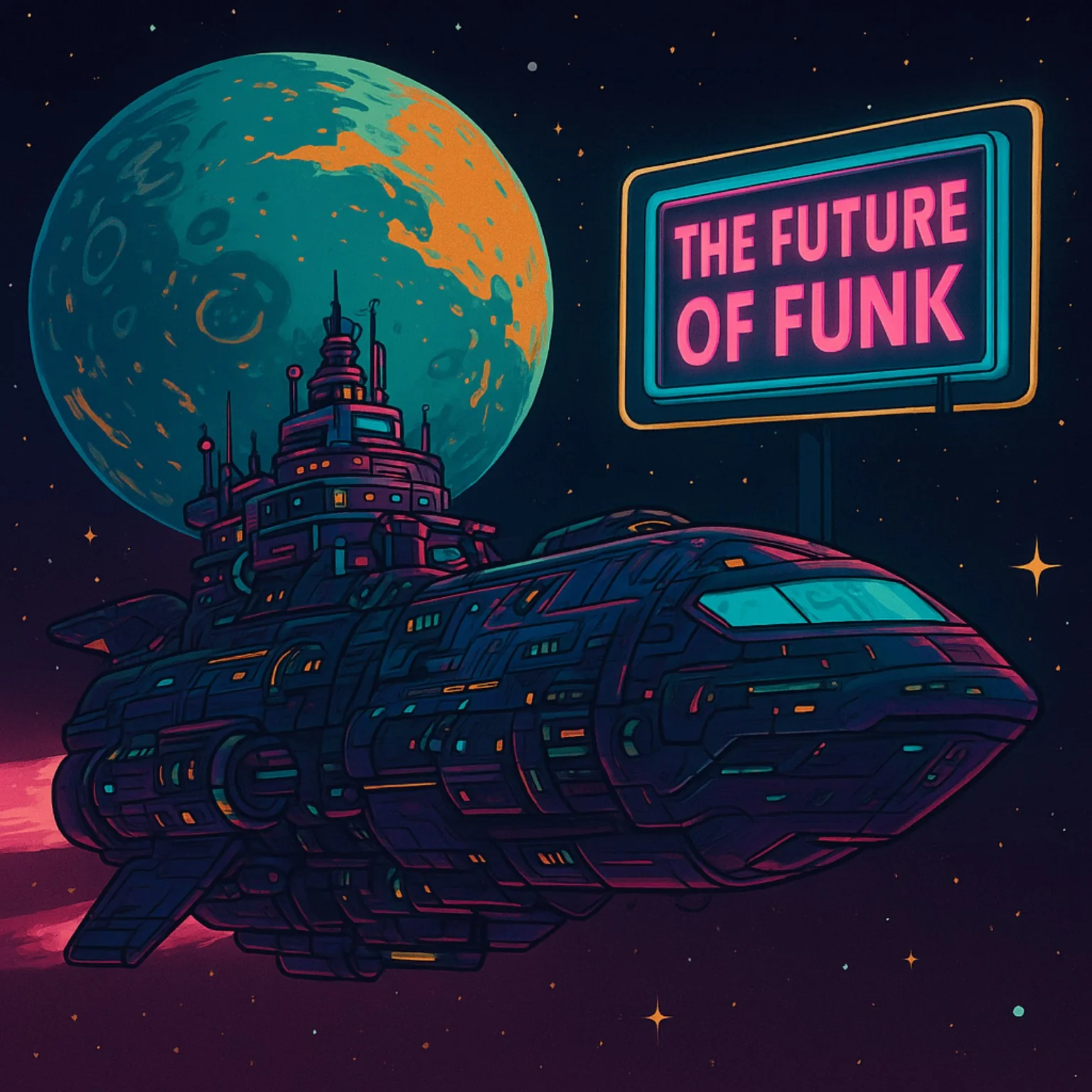
The ship entered the Future of Funk visual world through billboard concepts, planets, cityscapes, and early campaign environments.
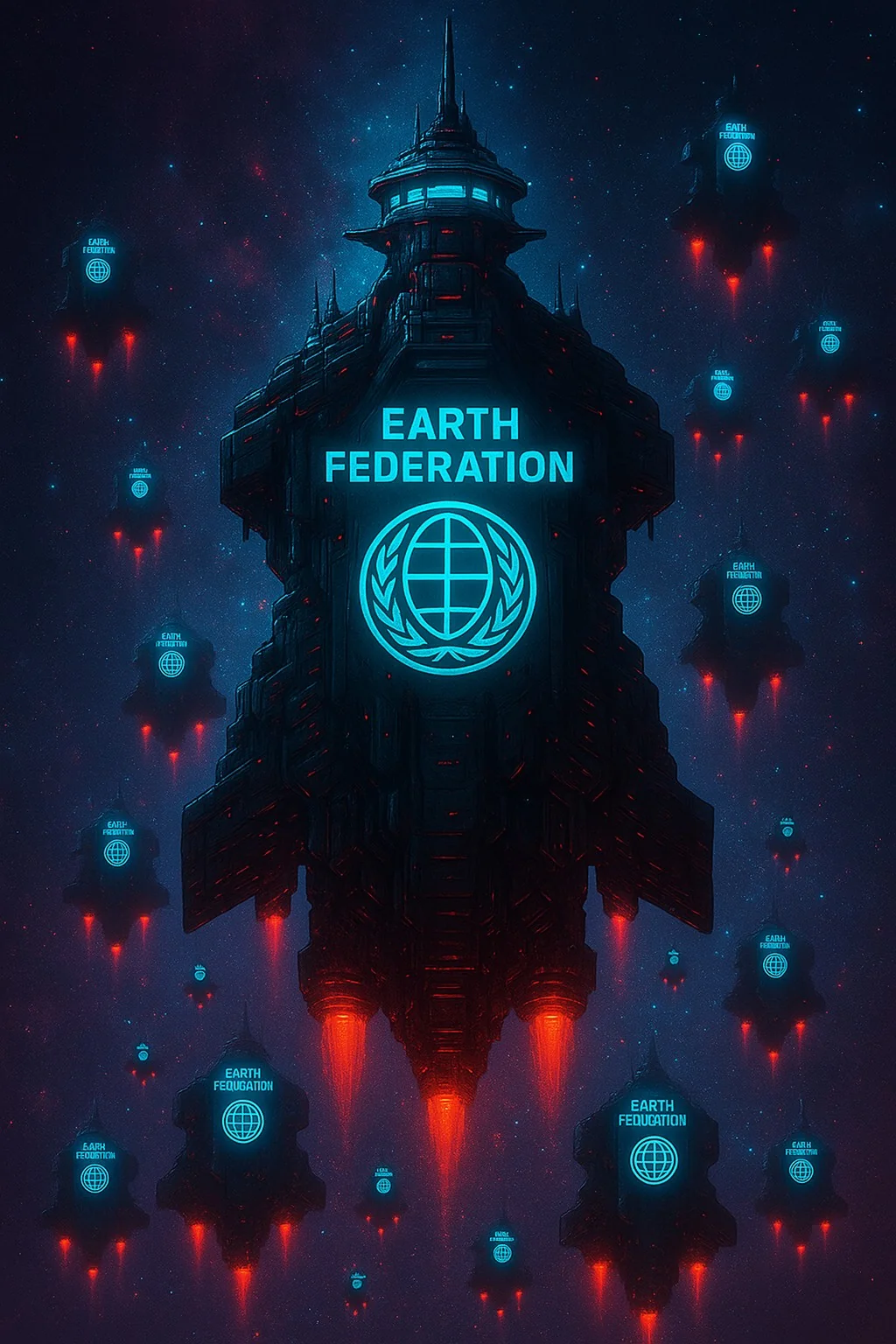
Earth Federation imagery expanded the mythology into fleets, command structures, and a larger political conflict.
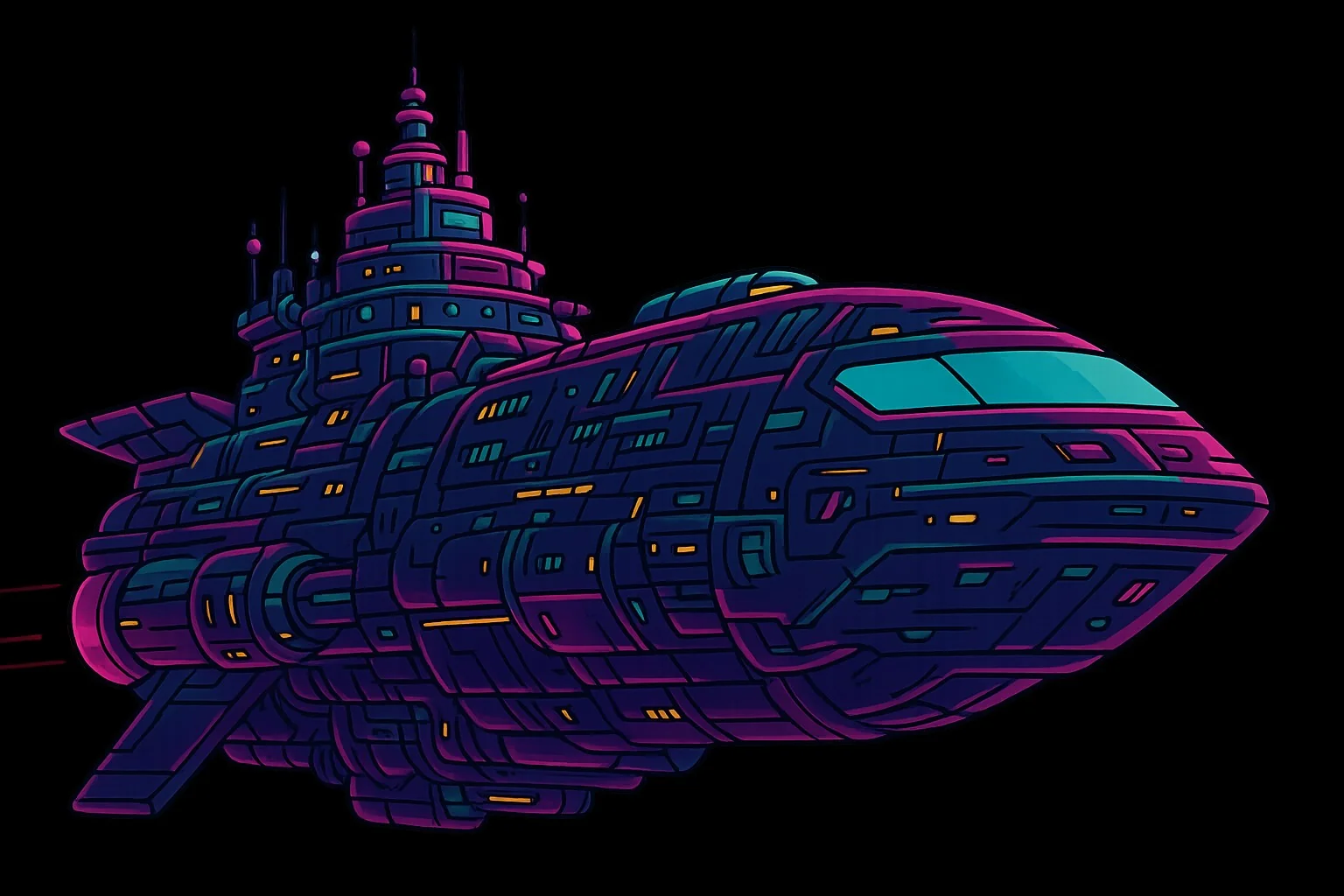
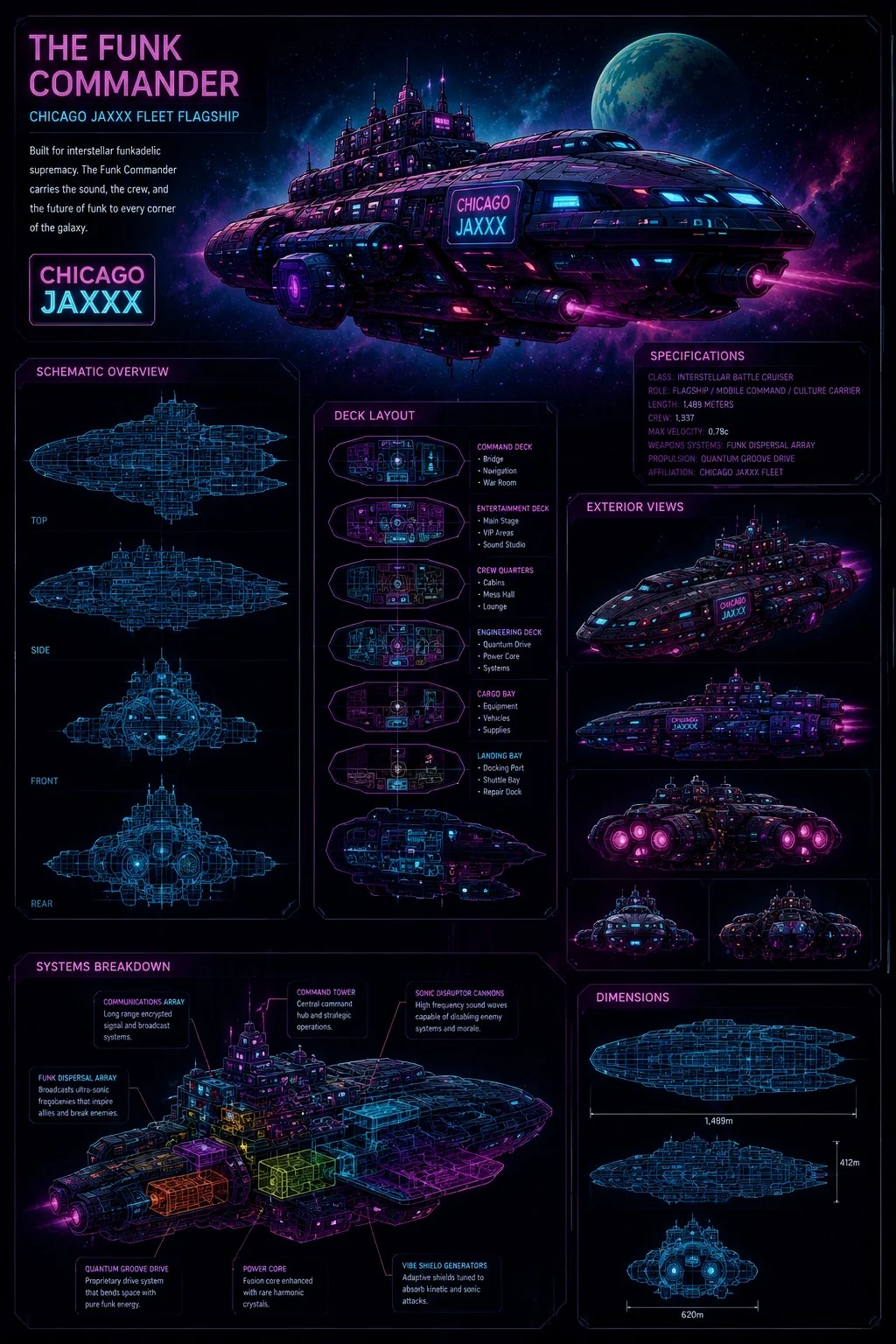
The ship became a flagship: a mobile command center, culture carrier, and recurring visual anchor for the project.
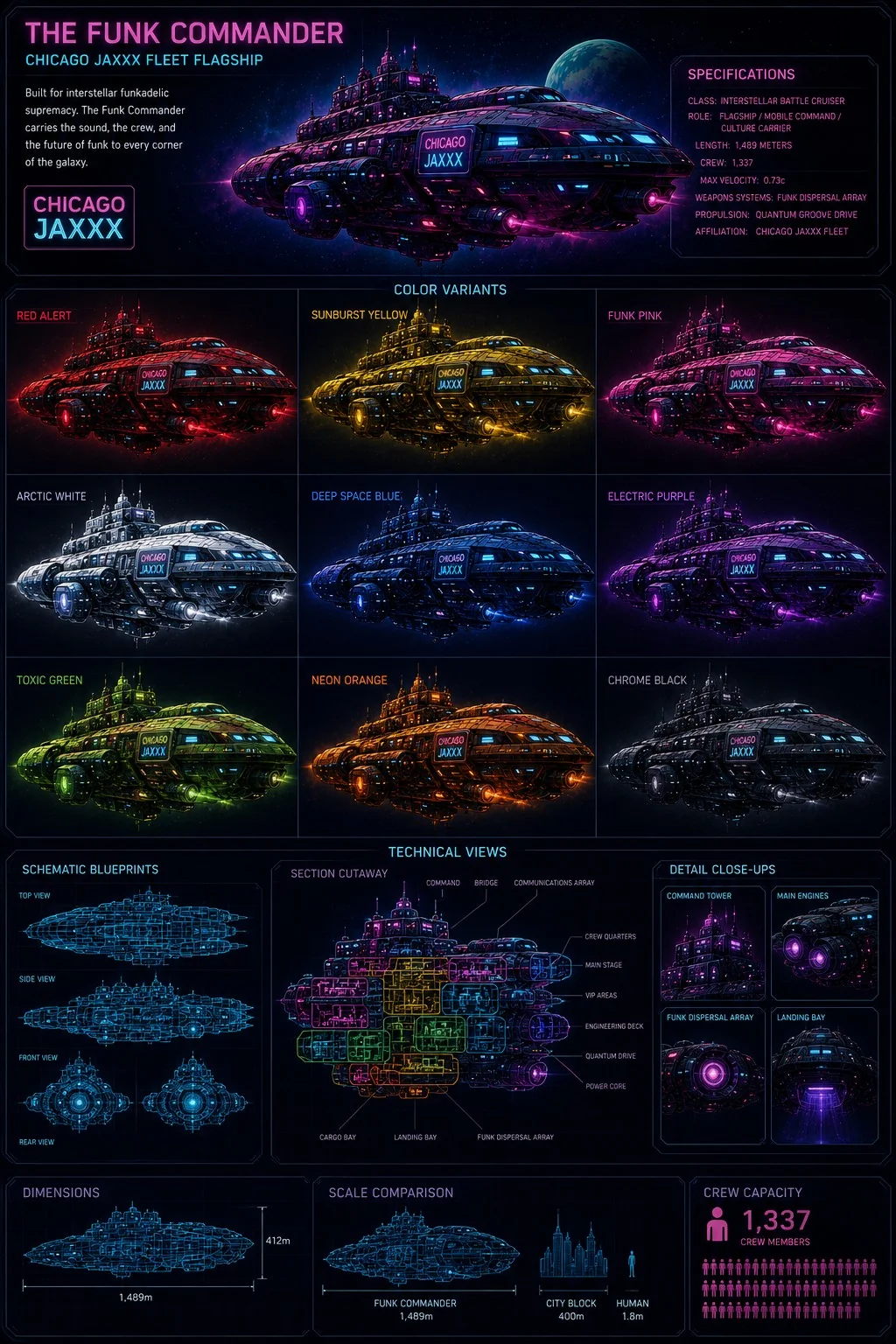
Blueprints, cutaways, color variants, crew counts, propulsion systems, and deck layouts transformed the ship into a lore object.
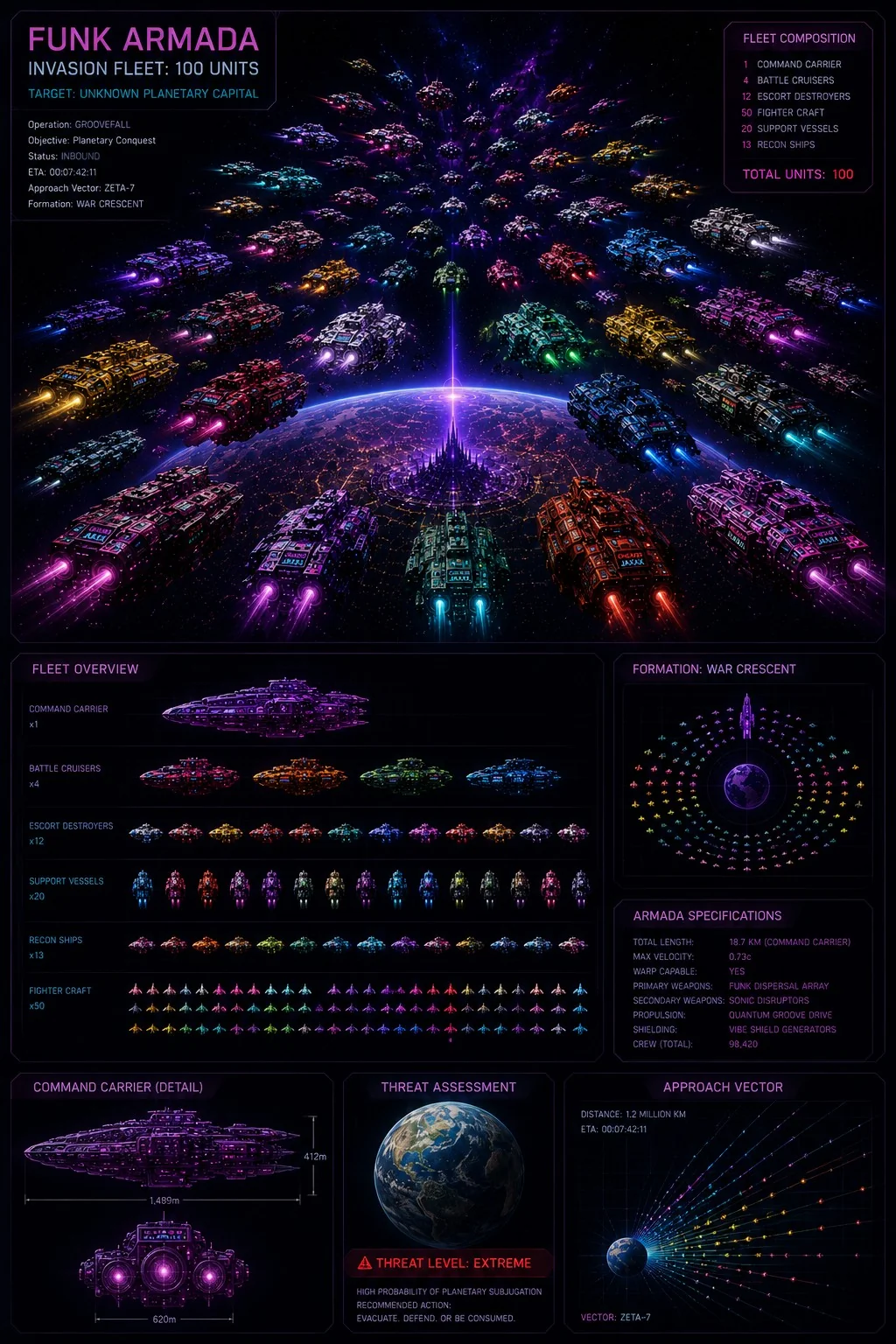
The idea expanded from one ship into a fleet: a complete visual language for battles, factions, campaigns, and future storytelling.
As the Future of Funk universe continued to develop, many people focused on its most visible elements: the trading cards, the alien worlds, the characters, the weapons, and the visual spectacle that eventually surrounded the project.
What often went unnoticed was the role of the ship itself.
The ship was not simply another piece of artwork. It became the central asset that unified the entire universe.
Before the ship, there were ideas.
There were songs.
There were concepts.
There was a growing mythology.
But there was no single object capable of connecting everything together.
The ship solved that problem.
It provided a way for the story to travel between worlds.
It connected artists to a shared universe.
It created a home for the crew, the music, the fleet, and the mythology.
The ship also served another purpose.
It was home.
The crew lived there.
They traveled there.
They ate there.
They slept there.
They planned missions there.
They celebrated victories there.
They survived defeats there.
It was the Millennium Falcon.
It was Serenity.
It was the USS Enterprise.
It was Battlestar Galactica.
It was the Rocinante.
It was a mobile city, a command center, a sanctuary, and a home.
The large carrier-class vessels seen throughout the Future of Funk universe serve as command ships, cultural centers, fleet headquarters, and mobile cities.
However, they are not the only ships.
Smaller starfighters and combat craft were developed as part of the expanding fleet structure. These vessels appear throughout later visual campaigns and videos, including the battle sequences created for Cristian Varela.
As the visual universe matured, the ship evolved again.
Entire squadrons of starfighters emerged from its hangars.
Escort ships protected it.
Battle cruisers fought alongside it.
Recon craft explored unknown sectors.
Support vessels carried supplies and personnel across the stars.
What began as a single ship eventually grew into a complete armada.
Every ship represented a contributor.
Every fleet represented a community.
Every mission represented a new release, a new collaboration, or a new chapter in the story.
What started as a single concept sketch became an entire civilization.
And at the center of it all remained the ship that started everything.
These images preserve the development path from early cruiser concepts to the Funk Commander and Funk Armada systems.
While the flagship became the backbone of the Future of Funk universe, it was never intended to fight alone.
As the mythology expanded, smaller combat vessels began appearing throughout the archive. These starfighters represented the next stage of development after the flagship itself.
Unlike the massive carrier-class ships that transported crews, artists, equipment, and fleet resources, the starfighters were purpose-built for speed, reconnaissance, interception, and direct combat.
These were the ships seen diving into battle during the Cristian Varela visual campaigns.
They launched from larger carriers, engaged hostile fleets, escorted command vessels, and fought on the front lines during armada-scale conflicts.
The flagship may have carried the culture, but the starfighters carried the fight.
As fleet warfare evolved, these vessels became some of the most recognizable craft in the Future of Funk universe, appearing repeatedly throughout battle artwork, promotional campaigns, and animated sequences.
Together, the carriers, cruisers, support vessels, and starfighters transformed Future of Funk from a single ship concept into a living fleet ecosystem.
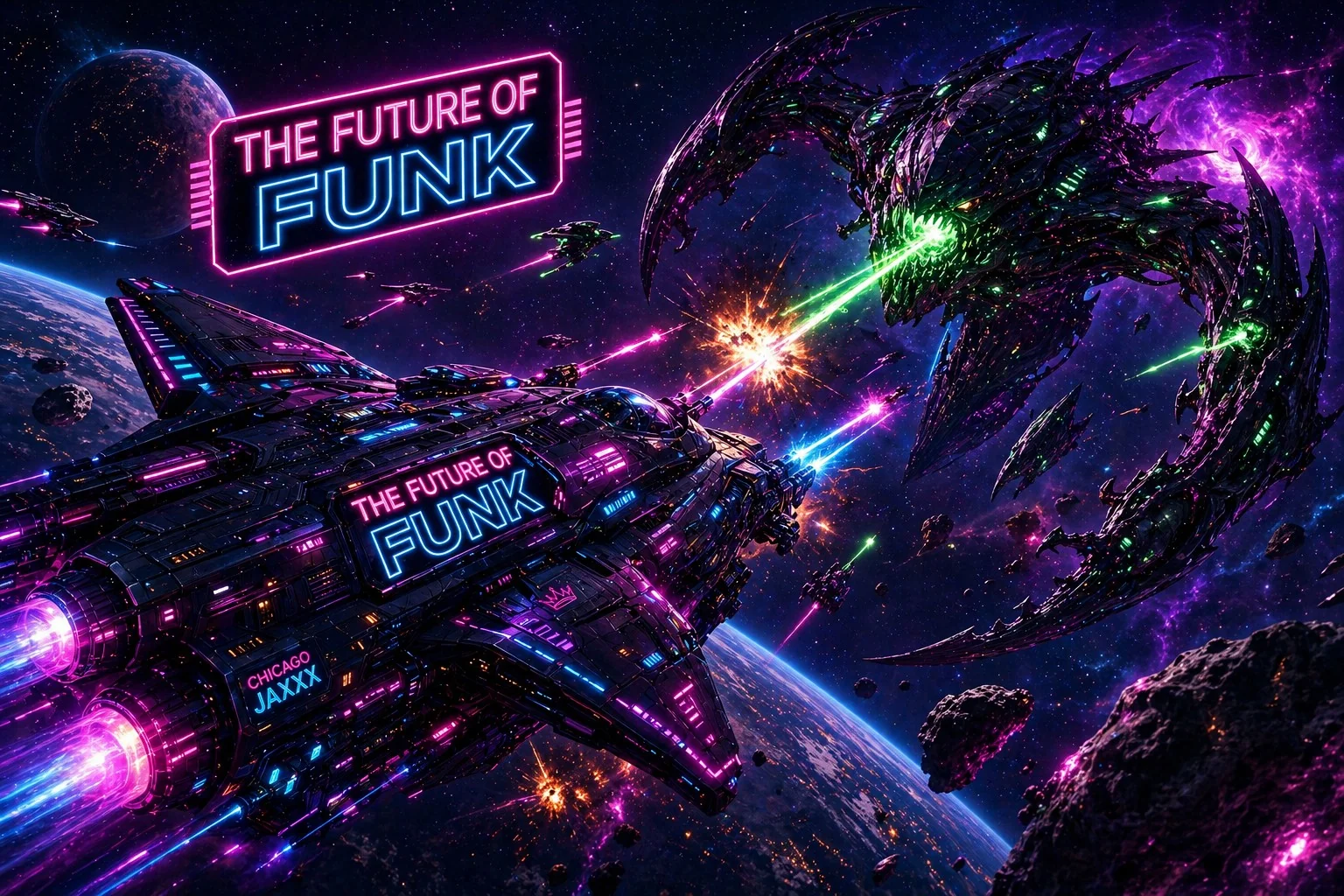
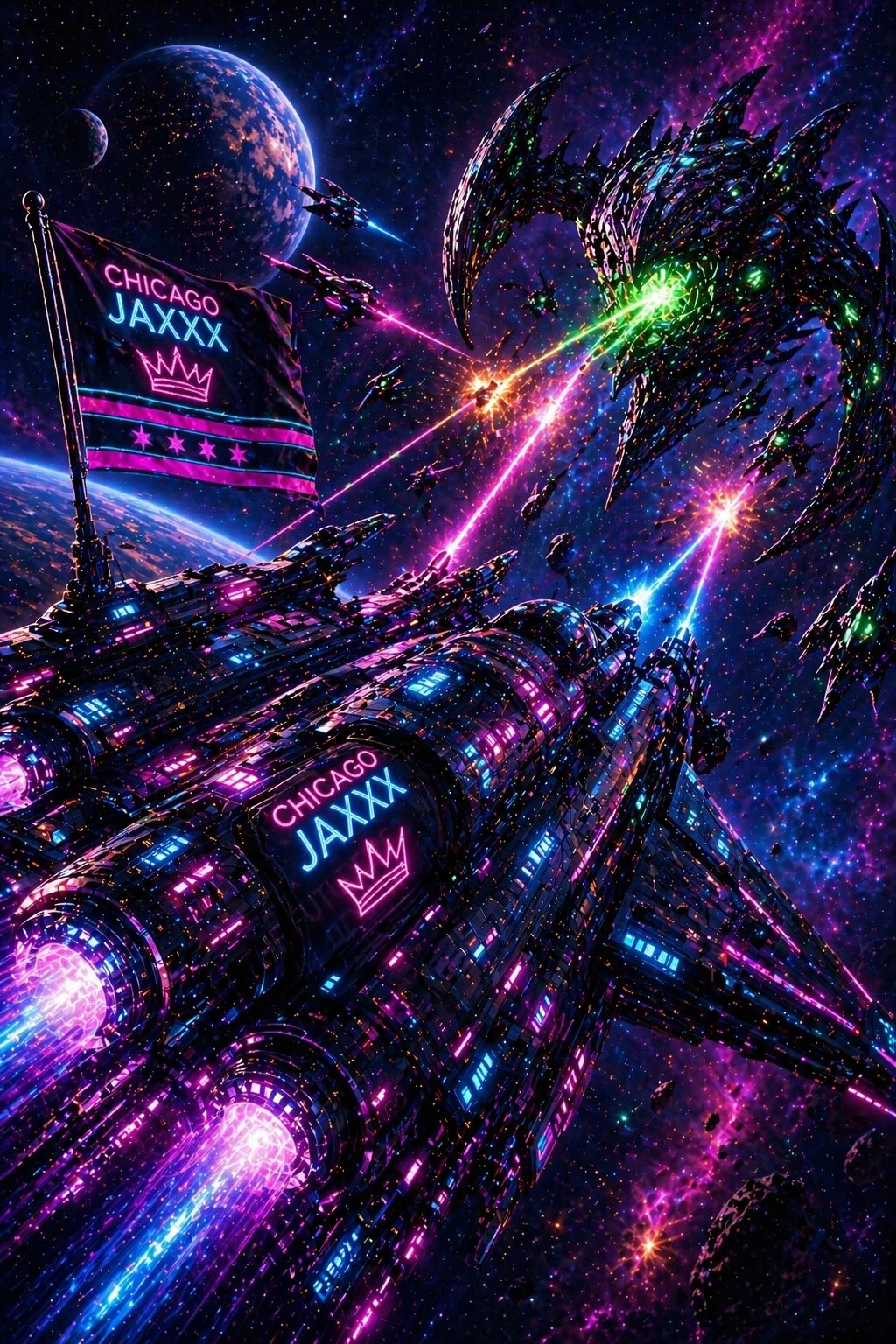
These clean battle artworks document the smaller combat craft operating around the larger carrier-class ships. The starfighters became the visual bridge between the flagship, the armada, and the first active fleet battles inside the Future of Funk universe.
Roster // Fleet Identity
The ships carried the mythology, but the remixers carried the mission. The Assembly chapter explains how the roster came together before the artists became the faces of the Trading Card Archive.
Meet The Fleet →The emergence of starfighters marked the beginning of large-scale fleet warfare within the Future of Funk universe.
The first battle imagery introduced hostile alien forces, carrier formations, escort wings, and coordinated attacks involving multiple classes of ships operating simultaneously.
These scenes represented the moment the universe expanded beyond exploration and worldbuilding into active conflict, giving the fleet a purpose and a challenge to overcome.
Fleet Command // Assembly Chapter
The Assembly of The Future of Funk documents how artists from multiple countries, labels, scenes, and underground networks were brought together to reinterpret Brad Lee's original material.
Read The Assembly →This chapter is part of the Future of Funk archive. Continue from the story into the release itself through the official music platforms below.
Archive node 5 of 11
The Future of Funk was built around Brad Lee, The Combined, Chicago Jaxxx, and a large international remix roster. Ronnie Vineyard contributed to the visual direction, archive framework, campaign documentation, and collaborative structure connected to SELFED MADE.
The Combined is the collaborative identity connected to Brad Lee and Ronnie Vineyard within the Future of Funk universe.
The project is documented as a 39-track collaborative release and remix package.
The release was structured with many remixers and styles, creating multiple entry points across electro, breaks, electronica, techno, hard techno, progressive house, peak-time techno, hard dance, and tech house audiences.
SELFED MADE documents the people, visuals, campaign evidence, artist relationships, and long-form archive context surrounding the release. The archive is designed to preserve the human story behind the project, not just the release listing.
Follow the people, releases, evidence, and project chapters connected to this page.